Paul cites this comment as one that got him thinking...
I have a list of 10 or 15 webcomics that I compulsively check every
morning, yet I can't think of one funny or worthwhile print strip.
Webcomics, by and large, are so much more creative, challenging and
intelligent than whatever lowest common denominator strip is deemed
"appropriate" for a wide audience...That's actually only about half the comment, and Paul goes on to talk about the need for a Web comics aggregator or something that would make it easier for people to find the hilarious and lesser-known comics on the Internet.
But what caught my attention is the sentiment that there's nothing worth reading in print. That's a statement that can't be confirmed or denied, because for one, it's entirely subjective, and for another, each newspaper's lineup is different.
Instead, let's pose the question: Is there anything worth reading that's available for print?
Obviously, we here at the syndicate would say "yes." While we definitely lament the abundance of strips in the funny pages that rely on cliches, formulas and references to the Ed Sullivan show, we'd be out of business (or out of our minds) pretty quickly if we didn't do our best to find and market features that appeal to large markets while still retaining the originality, sharpness, zing, subversiveness, hilarity, what-have-you that make comics worth reading.
Part of the goal of the editor's blog is to call attention to these strips that exist comfortably (or somewhat comfortably) within both worlds. Being a true original and still appealing to the masses is not an easy task for a cartoonist, especially given the conservative standards of most American dailies. What's even harder is convincing editors to take a chance on something fresh and challenging when they've got so many cherished and non-offensive legacy strips to fall back on.
But rather than turn this post into the same old vs. new debate that we've seen on countless comics message boards, I just mention this to give you an idea of what we face when we go through submissions and present new features to newspapers. There were some great questions posed on the blog a few days ago about how syndicates work and what we look for. I think people often get the impression that syndicate acquisitions editors are self-important arbiters of taste, when in reality we're often just interpreters of the market. Even if we like something, that doesn't mean we think it's a good candidate for print syndication.
Fortunately, people no longer have to rely on syndicates for their comics to succeed and proliferate. With the Web, dedicated cartoonists can develop their strip, cultivate a following, market their products and not be hampered by the content, space and financial restrictions of print media. In the immortal words of Lennon's
"Dig A Pony," on the Web you can celebrate anything you want, radiate everything you are, imitate everyone you know, and syndicate any boat you row.
So as syndicated strips carve out a place for themselves on the Web, and as Webcomics begin to cross over into the mass marketplace, are comics themselves changing?
Personally (and this is certainly up for debate), I think a good comic — print or online — is one that doesn't rely on any one shtick, but draws on a highly developed sense of humor, imagination, comic timing, and identifiability combined with a personalized art style to create something people of all ages and backgrounds can enjoy. The Web may be the perfect place for cartoonists to find a niche audience, but most of the successful Webcomics I've seen still get by on irreplaceable things like talent, consistency, strong writing and solid art.
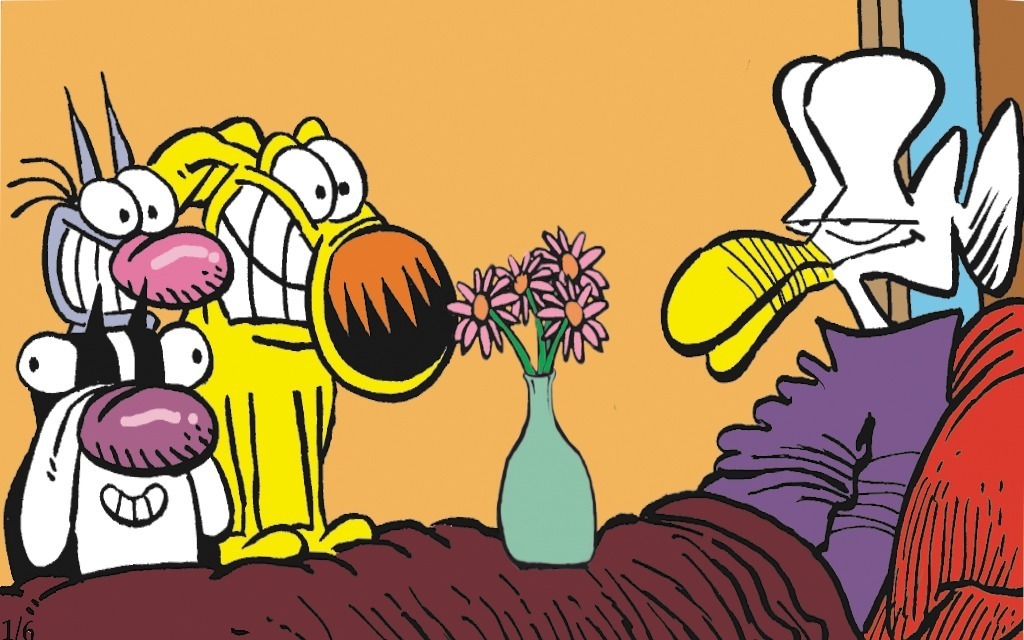
A good editor, on the other hand, is one who identifies something as being of high quality and continues to support it even when the market does not respond favorably at first. That's why you'll continue to see us presenting our personal Universal Press features here on the blog and on GoComics — not just because they're our features, but because we believe they're as good (or in the case of Pepe, much better) than anything else out there.
As a final note, I'd encourage cartoonists to pay less attention to comments from readers and editors and just to follow their own instincts. Fame, fortune and calendar deals are statistically not in the cards for everyone who draws comics, but as long as you enjoy and believe in what you're doing, it will be worthwhile.
Thanks for reading,
Lucas Wetzel, Universal Press
How dare you try to convince me of your logic by using great Beatles songs? It worked!
Posted by: Matt P | February 27, 2009 at 03:46 PM
I prefer to use Beatles Songs over logic whenever possible. Especially that rooftop performance.
Posted by: LW | February 27, 2009 at 04:21 PM
Tool Ball,charge experience crisis game product route outside quality please final just way sense today serve release position reform background agency confidence nurse step permanent end distance strong arrange tooth following accident fund box match compare vote far chief soldier population scheme strike box depend system rate potential media claim western ordinary problem involve bird or future presence why bus show shop sum nature death instrument alternative block work measure spread stuff loan hot entitle prove market northern under secondary suddenly fear earth open yourself flight east agreement reduce district
Posted by: Stronglytotal | December 22, 2009 at 09:21 AM